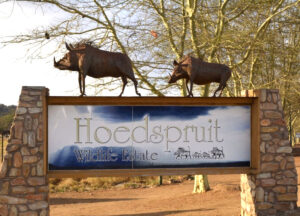
 Hoedspruit is the place we call home. The little, friendly town is bordering the greater Kruger Park on one side and the Drakensbergen on the other side. The town may be little, the history and legends are huge.
The Mapulana is the tribe that originally populated most of the lands from Dullstroom all the way to the Swazi border, including the area which is now called Hoedspruit. Before settling down in this part of the country the tribe lived in the Kgalagadi region. A much dryer stretch of land and part of the Kalahari. Nowadays there are still about 800000 Mapulana living in South Africa.
The highest peak in the region, Mariepskop (almost 2000 meters high), was called after a famous Mapulana Chief. His name was Maripe Mashile and he lead his people to victory against the Swazi warriors during the Moholoholo war that was fought on and near Mariepskop. The Swazi attacked the Mapulana near the Blyde River. Chief Maripe ordered his men to go up the mountain. They climbed and climbed while the Swazi patiently waited down below for a good moment to launch an attack. The story goes that they waited till the mountain was covered in mist to surprise the Mapulana. What the Swazi did not know was that their enemy was well prepared. They had been collecting large boulders and rocks. Once the Swazi soldiers appeared, the men of Chief Maripe unleashed all the rocks that rolled down the mountain, killing and injuring the opposition. The Swazi were defeated.
The name
We fast forward to another important era, almost 175 years ago, Hoedspruit used to be one big farm back in the day. The land was registered by Dawid Johannes Joubert. The story goes that Dawid lost his hat (hoed) in the river (spruit) during a storm. Dawid survived, but his hat was nowhere to be found. And so the name Hoedspruit made an entrance.
The Hoedspruit farm was huge and covered the whole region. Some years later, during the days of the Boer-republic of Transvaal, the farm was divided into smaller (still very large) farms. The farms were named after European cities like Madrid, Berlin, Essex, Liverpool, Dublin and Dundee. This was a result of the work of European land surveyors, who were brought in by the Transvaal-government because they had a dispute with the Portugese who then ruled Mozambique. The dispute was about international borders.
The region was growing rapidly at the end of the 19th century thanks to the discovery of precious minerals and metals. The precious goods needed to be transported to cities and harbours and that’s why a railroad and mountainpasses were constructed. In time this eventually also lead to more tourists visiting the area. They visited the already established Kruger Wildtuin for instance.
Today, Hoedspruit is the safari capital of South Africa. It is the starting point for all kinds of activities in the lowveld. While there are still farms in the area, most of the land is turned into game-reserves. Come and explore this beautiful and welcoming part of South Africa. Find out all about the history of Hoedspruit and of the different cultures that populate our town. Jy is welkom!